Kirby Council Approves $14.89 Million Bond Package, Opening a New Era of City Investment
The July 9 vote clears the way for approximately $15 million in project funding for municipal facilities, streets, drainage, parks, utilities and public-safety needs—but it also begins a three-decade public accountability period.
Kirby did not merely approve a construction list. The council authorized a long-term financing structure that converts strong investor demand into city improvements while committing future city revenues through 2056.
The Kirby City Council voted July 9 to authorize the City of Kirby’s Combination Tax and Revenue Certificates of Obligation, Series 2026, moving the two-square-mile Bexar County community from financial planning into long-term project execution.
The council’s approval of Ordinance 2026-7777 authorized the issuance, sale and delivery of the debt, along with the official statement, purchase contract, paying-agent agreement and related financing documents.
The action came after Hilltop Securities presented a financing that had improved substantially from earlier projections. The city was positioned to borrow slightly less principal, place more money into its project fund, pay a lower effective interest rate and reduce projected aggregate debt service.
Council authorization—not a voter-approved bond election
The phrase “the bond passed” is accurate as a description of the council action, but it requires an important qualification: Kirby voters did not approve this debt in a citywide bond election.
The city used certificates of obligation, a form of municipal debt that Texas cities may generally authorize through their governing bodies after publishing notice. Kirby’s ordinance states that the council initiated the process May 7, published notice in the San Antonio Express-News on May 13 and May 20, and scheduled the final consideration for July 9.
The ordinance further states that the city did not receive a protest petition signed by at least 5% of Kirby’s qualified voters. Without a sufficient petition triggering an election requirement, the council proceeded to decide the financing.
There was no citywide ballot proposition approving the Series 2026 certificates.
The elected council authorized the debt, transaction documents and long-term repayment structure.
A broad authorization covering the city’s essential systems
The ordinance provides broad legal authority for Kirby to use the proceeds across several categories:
- Renovation and equipping of City Hall, municipal court and utility-administration facilities.
- Municipal-court, administrative and emergency-command-center facilities.
- Streets, sidewalks, trails, bridges, parking, drainage, traffic signals, landscaping and lighting.
- Parks and recreational facilities available to the public.
- Waterworks and sewer-system improvements.
- Vehicles and equipment for police, fire, public works and other departments.
- Land, buildings, rights-of-way, machinery, supplies and other authorized capital needs.
- Engineering, architecture, legal, financial and issuance expenses connected to the projects.
These categories establish what the city is legally permitted to finance. They do not, by themselves, identify the final amount assigned to each project. That allocation becomes the next major public-accountability question.
More than $12.8 million in projected interest over 30 years
The city’s financing schedule projects annual payments of approximately $921,000 to $926,000 from 2027 through 2056. The certificates carry a call date of March 1, 2036, potentially allowing Kirby to refinance or retire eligible debt after that point if future market conditions and city finances make doing so beneficial.
The presentation projected an approximately 11-cent increase in the interest-and-sinking tax rate associated with the tax-supported project financing. That forecast is not the same as a guarantee of every future tax bill. Actual effects will also depend on assessed property values, tax collections, utility-supported portions of the financing and future council budget decisions.
Investor demand materially improved the transaction
Kirby’s offering reportedly attracted approximately $161.59 million in investor orders for $14.89 million in certificates—about 10.8 times the amount available.
That oversubscription allowed interest rates on individual maturities to be reduced by 2 to 12 basis points during pricing. Hilltop reported that the reductions lowered the proposed true interest cost by approximately 11.6 basis points.
The strong order book is nevertheless meaningful. It indicates that institutional investors found Kirby’s insured securities attractive at the offered yields. S&P assigned the city an underlying A+ rating with a stable outlook, while Assured Guaranty bond insurance reportedly enhanced the securities marketed to investors to AA.
The insurance guarantee and rating enhancement helped widen the potential buyer pool and were projected to reduce the true interest cost by approximately seven basis points, producing an estimated financing benefit greater than the insurance premium.
A consequential vote in a divided meeting
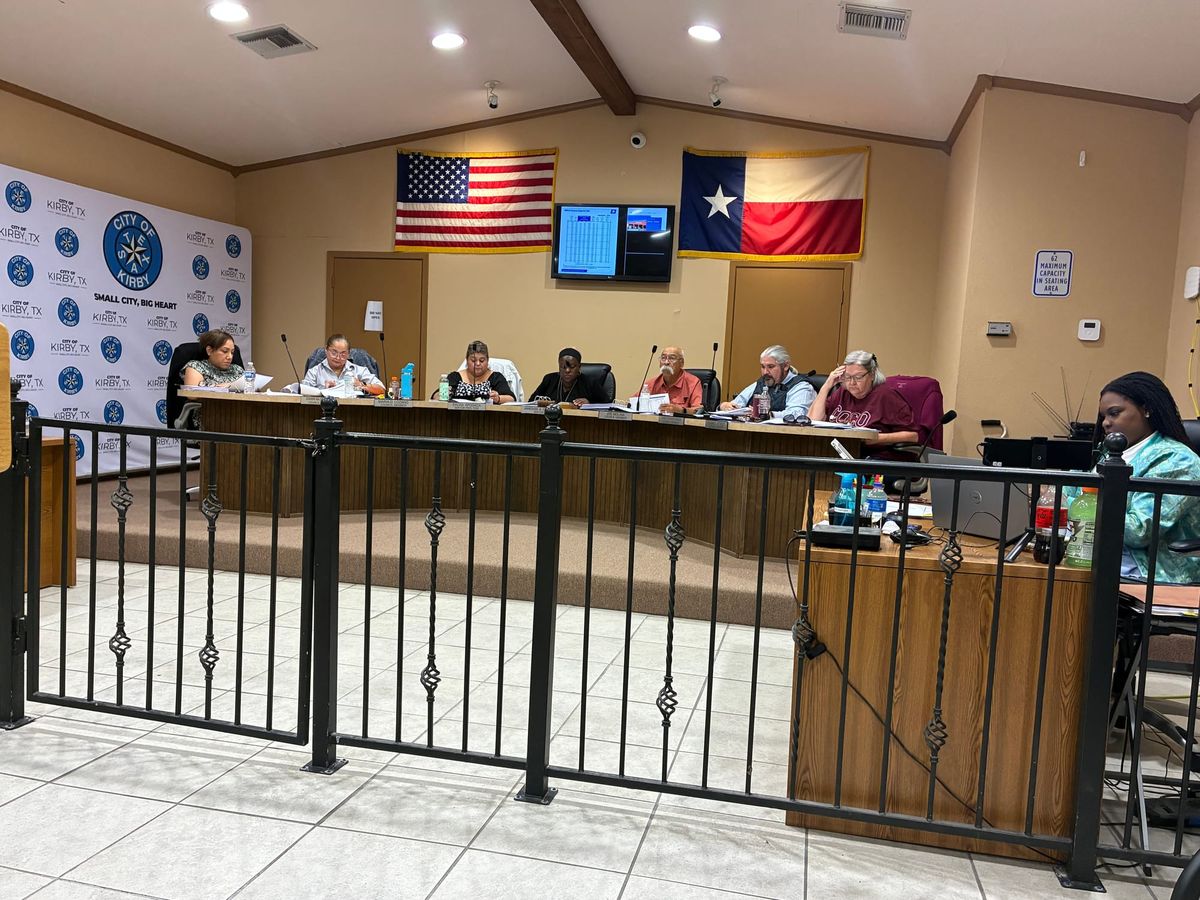
The bond authorization passed during a meeting marked by sharp disagreement over several city matters. Texas Capital Report's staff attended the July 9th session and observed the high levels of frustration Councilmembers Susan Street and Christopher Garza exhibited as they voted against the bond authorization. The tensions appeared very personal against the City Manager Dr. Brian Rowland. The Mayor acted very swiftly to keep good order throughout the meeting as accusations were punted towards the City Manager. Despite the exchanges, the meeting continued to learn of the S&P A+ rating earned by the city staff and Hilltop Securities presentation revealed great market success which the company credited to the hard work and relationship of 30 years managing the Kirby account.
The disagreement within the Kirby City Council does not change the legal result: a council majority approved the financing, allowing the transaction to proceed. But the divided vote makes transparent project reporting even more important. Residents should be able to distinguish legitimate questions about priorities and execution from opposition to borrowing itself.
Approval begins the accountability period
The vote does not itself repair a road, renovate a building or purchase a public-safety vehicle. It gives Kirby access to capital and authorizes the repayment obligation.
Residents should now be able to follow:
- The final list of projects and the dollar allocation assigned to each.
- Procurement methods, winning contractors and contract values.
- Construction schedules, change orders and cost overruns.
- How much of the debt is supported by property taxes versus utility revenues.
- Annual debt-service coverage and the city’s reserve position.
- The actual interest-and-sinking tax rate adopted each fiscal year.
- Whether completed projects produce the promised service and infrastructure improvements.
For a city of approximately 8,765 residents occupying about two square miles, a $15 million capital program is substantial. It gives Kirby an opportunity to address accumulated infrastructure and facility needs at a scale that ordinary annual revenues may not permit.
It also creates a responsibility extending across multiple councils and city-management administrations. The final maturity is scheduled for 2056. Some officials who approved the financing will have left office long before its last payment is made.
Kirby has secured the financing authority. The next measure of success will not be the bond sale itself, but whether the city converts $15 million in available capital into visible, durable and publicly documented improvements.