Royce West Leads 89R Legislative Productivity as Spot Bid Fair Expands Business Access
Texas Legislative Intelligence · 89th Regular Session
Beyond the Bill Count: Royce West’s 33-Year Senate Record Shows What Institutional Capacity Can Look Like
Senate District 23 led the 89R successful-measure volume analysis with 291 successful measures. For Sen. Royce West, that performance comes in his 17th regular Legislature and more than 33 years after he first entered the Texas Senate — alongside a procurement-access system that connected businesses to 98 FY2026 opportunities across 26 Texas agencies and public institutions.
Key Findings
AUSTIN — The Texas Legislature is often covered as a collection of votes, personalities and partisan fights. But behind every measure that moves is an office full of people doing the difficult, repetitive work of government: researching law, drafting language, managing deadlines, negotiating amendments, coordinating committees, tracking calendars and keeping legislation alive long enough to reach a successful outcome.
The National Data System’s certified analysis of the 89th Regular Session gives Texas Capital Report a new way to see that work. Senate District 23, represented by Sen. Royce West, recorded the largest successful-measure volume of any Texas legislative district office in the analysis: 291 successful measures from 499 eligible measures, a 58.32% success rate.
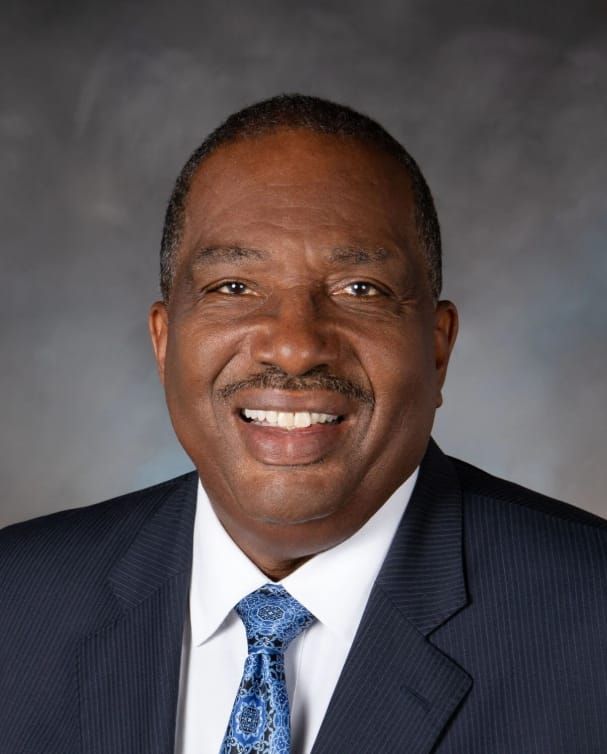
West first entered the Texas Senate on January 12, 1993. The 89th Regular Session was his 17th regular Legislature, placing the 291-measure result inside a public-service career spanning more than 33 years. The Texas Legislative Reference Library also records West as Senate President Pro Tempore during the 79th Legislature.
Longevity by itself does not prove legislative effectiveness. But a career of that length can build institutional knowledge, relationships, staff experience and operating systems that help explain why an office is able to carry a large legislative workload. The 89R data gives us a measurable result; West’s service history provides important context for understanding the institution behind it.
That number deserves to be read as more than a ranking. It reflects the output of a public office — the senator, chief of staff, legislative director, policy staff, administrative staff and the broader network of committee and Capitol professionals required to move a large body of work through the legislative process.
Royce West · Three Decades of Senate Service
89R Successful-Measure Volume · Leading Legislative Offices
| Volume Rank | Office | Member | Party | Successful Measures | Eligible | Rate |
|---|---|---|---|---|---|---|
| 1 | SD-023 | Royce West | D | 291 | 499 | 58.32% |
| 2 | SD-001 | Bryan Hughes | R | 271 | 465 | 58.28% |
| 3 | SD-021 | Judith Zaffirini | D | 269 | 463 | 58.10% |
| 3 | SD-029 | Cesar Blanco | D | 269 | 448 | 60.04% |
| 4 | SD-018 | Lois Kolkhorst | R | 263 | 433 | 60.74% |
| 5 | SD-012 | Tan Parker | R | 222 | 437 | 50.80% |
| 6 | SD-020 | Juan Hinojosa | D | 219 | 349 | 62.75% |
| 7 | SD-027 | Adam Hinojosa | R | 199 | 360 | 55.28% |
| 8 | SD-030 | Brent Hagenbuch | R | 183 | 342 | 53.51% |
| 9 | HD-023 | Terri Leo-Wilson | R | 180 | 451 | 39.91% |
| 10 | HD-070 | Mihaela Plesa | D | 171 | 396 | 43.18% |
Productivity and efficiency are not the same thing
Texas Capital Report treats successful-measure volume as a measure of legislative productivity and success rate as a separate measure of conversion efficiency. An office can carry an unusually large portfolio and move a large number of measures successfully even if its percentage rate is lower than that of an office carrying fewer eligible measures.
That distinction matters when recognizing the people behind the work. SD-020, represented by Sen. Juan Hinojosa, recorded 219 successful measures and the highest success rate among the offices shown here at 62.75%. HD-023, represented by Rep. Terri Leo-Wilson, produced the highest House volume in the group with 180 successful measures from a much larger eligible portfolio.
West’s public-service infrastructure extends beyond the bill pipeline
The FY2026 dataset for Sen. West’s Doing Business Texas Style Spot Bid Fair adds a second dimension to the story. Instead of measuring only what happened inside the legislative process, the dataset shows a public-service structure designed to connect businesses directly to state purchasing opportunities.
That matters in the context of a Senate career that began in 1993. Legislative careers are often judged session by session, but durable public-service institutions can outlast any single bill. The Spot Bid Fair provides a measurable example of an office using relationships with agencies and universities to create a recurring pathway for businesses to see and compete for government purchasing demand.
The source contains 169 rows, but those rows should not be mistaken for 169 contracts. After normalizing repeated line items and placeholder solicitation numbers, the National Data System identified 98 conservative procurement-opportunity records, including 92 unique named solicitations, across 26 participating Texas agencies and public institutions.
That matters because it shows an elected official using the reach of public office to build an access mechanism — one that puts businesses in front of real state and university purchasing demand.
FY2026 Spot Bid Fair · Procurement Access
Conservatively identified procurement opportunities.
Unique named solicitations after repeated line items were normalized.
Participating agencies and public institutions represented in the dataset.
Conservative known reported value from opportunities with usable exact estimates.
Which agencies brought the most opportunities?
Texas Parks and Wildlife supplied the largest number of distinct opportunities in the FY2026 dataset, followed by the Texas Juvenile Justice Department, the Texas Workforce Commission, the Texas Water Development Board and UT Southwestern Medical Center.
The purchasing demand was real — but the dataset does not prove awards
The largest exact-known opportunity shown in the FY2026 dataset was a $50,000 grinder-pump solicitation from Texas Parks and Wildlife. Other disclosed opportunities included $34,000 for dump trailers, $34,000 for turbine blowers, $25,000 for enclosed cargo trailers, $25,000 for a trailer-mounted generator and $23,000 for equipment trailers.
But the data has an important limitation. Only 44 of the 98 conservative opportunities had usable exact positive values in the Estimated Worth field. The remaining records include zeros, blanks, “N/A,” placeholders, upper-bound text and other values that cannot responsibly be treated as exact opportunity dollars.
For that reason, the $464,785 figure is a conservative known-value floor from the subset of opportunities with usable exact estimates. It is not the total economic value of the Spot Bid Fair, and it is not an awarded-contract total.
A Note of Recognition
Texas Capital Report recognizes the public servants behind these results. Legislative success is rarely the work of one person. It is built through member leadership, staff research, drafting, scheduling, negotiation, committee work, interoffice coordination and persistent follow-through. The offices at the top of this analysis moved an exceptional volume of successful legislative activity during 89R. In the case of SD-023, the FY2026 Spot Bid Fair data also shows an office connected to an economic-opportunity infrastructure that reaches beyond the Capitol itself.
A broader way to evaluate public service
Traditional legislative scorecards often stop at bills authored, bills passed or votes cast. Those measures matter, but they do not capture everything an elected office does.
The data now available for Royce West points to at least two measurable dimensions: high legislative production inside the Capitol and institutional economic-access work outside the legislative pipeline.
That broader framework can be applied across the Legislature. Some members may distinguish themselves through high legislative throughput. Others may show exceptional conversion efficiency. Others may build durable systems around workforce development, procurement, education, health, infrastructure, constituent service or other public priorities.
The purpose of the National Data System and Texas Capital Report is not to flatten those differences into a single number. It is to make the work visible — and to give Texans a more complete picture of what their public offices are actually producing.
For West, the emerging picture now has at least three measurable layers: more than three decades of institutional experience, the highest successful-measure volume in the 89R office analysis, and a current procurement-access platform connecting businesses to state purchasing opportunities. Those measures do not tell the whole story of a legislative career, but together they show why public-service performance can be broader than the number of bills carrying a lawmaker’s name.
Senator Royce West - Doing Business Texas Style Spot Bid Fair FY2026
To view the dataset please select the data tab above or use the following link: https://data.texas.gov/dataset/Senator-Royce-West-Doing-Business-Texas-Style-Spot/3iy3-r5vp/data_preview Open Data Last Updated August 8, 2026