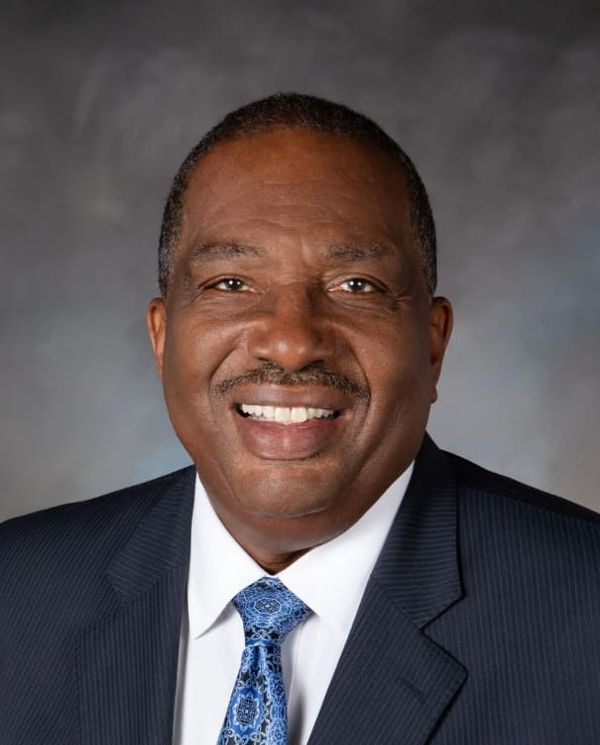
Josey Garcia’s Second-Term Impact Across 147 Legislative Measures
Pharaoh Clark, Chief of Staff HD 124,comments "Representative Garcia’s second-term record also reflected a sharper connection between committee responsibility and statewide policy... We continue to impact our Veterans and Active Duty in San Antonio...

From Energy and Water to Representation: Inside Josey Garcia’s 89th Legislature Record
In her second term, Rep. Josey Garcia held recorded roles on 147 legislative measures while serving on committees responsible for energy, water, natural resources and redistricting—placing the West San Antonio lawmaker inside some of Texas’ most consequential statewide debates.
Josey Garcia entered her second term in the Texas House with a broader committee portfolio, deeper legislative experience and a record of coalition work already established across hundreds of measures.
During the 89th regular session, the House District 124 representative held a recorded legislative role on 147 measures. Forty of those measures reached a successful legislative outcome: 29 bills were enacted, four constitutional-amendment proposals were approved by the Legislature and submitted to voters, and seven House resolutions were adopted.
Pharaoh Clark, Chief of Staff HD 124,comments "Representative Garcia’s second-term record also reflected a sharper connection between committee responsibility and statewide policy. We learned so much in our freshman year and have really studied our constituents and their needs. We continue to impact our Veterans and Active Duty Military personnel in San Antonio by listening and acting on their concerns. We were honored by the recognition as Freshman Legislator last session. Josey's assignments placed her in debates over energy production, water security, natural resources and the boundaries that determine political representation.""
The result was a portfolio that combined authorship, coalition work and cross-chamber participation with a broader role in questions affecting every region of Texas.
A second-term portfolio shaped by statewide responsibility
Garcia’s 89th Legislature record included 38 authored measures, 33 joint-authorship roles, 64 coauthorship roles, two joint-sponsorship roles and 10 cosponsorship roles.
Those numbers describe several kinds of legislative participation. Authorship identifies measures where Garcia occupied the lead position. Joint authorship reflects shared formal responsibility. Coauthorship and sponsorship roles show where she joined broader coalitions or helped legislation move across chambers.
Measures where Garcia held the lead authorship position in the originating chamber.
Measures where she shared formal authorship responsibility with other legislators.
Measures where Garcia joined a broader authorship coalition supporting another lawmaker’s proposal.
Measures where she shared responsibility for helping legislation move through the opposite chamber.
Measures where Garcia joined additional cross-chamber sponsorship coalitions.
One recorded Garcia relationship per measure in the 89th regular session.
Forty measures reached a successful legislative outcome
| Successful outcome | Measures | Meaning |
|---|---|---|
| Enacted bills | 29 | House and Senate bills that completed the legislative process and became effective. |
| Constitutional-amendment proposals | 4 | Joint resolutions approved by the Legislature and submitted to Texas voters. |
| Adopted House resolutions | 7 | House measures recognizing people, institutions, civic events and public contributions. |
| Total successful measures | 40 | Successful legislative instruments across several legal and procedural forms. |
An enacted bill becomes law. A joint resolution can place a constitutional amendment before voters. A House resolution can be adopted as the formal expression of the chamber. Garcia’s 40 successful measures included all three forms of legislative accomplishment.
What the successful measures actually did
The strongest way to understand Garcia’s second-term impact is to look beyond the totals and examine the measures themselves. Her successful portfolio reached veterans’ mental health, access to veterans’ benefits, disability-related financial protections, property-tax relief, dementia research, water infrastructure and real-estate identity safeguards.
HB 1965: Veterans’ mental-health services
Garcia led HB 1965, which directs the Texas Veterans Commission to study strategies for improving and expanding mental-health services provided to veterans.
The study focuses on the services already available through the commission and the steps Texas could take to strengthen access for veterans who need care.
HB 2193: Access to veterans’ benefits
Garcia joined the formal authorship team behind HB 2193, requiring the Texas Veterans Commission to examine how veterans’ benefits are delivered across the state.
The measure calls for analysis of where eligible veterans live, how many claims benefit advisors are available and where additional staffing may be needed.
HB 1041: Financial protections involving disability care
Garcia served as a joint author of HB 1041, which addresses when certain people providing care to individuals with disabilities may have an insurable interest in the lives of those individuals.
The law creates a more specific framework for disability-related caregiving relationships within Texas insurance law.
HB 4202: Identity safeguards in real-estate documents
Garcia joined HB 4202, which updates the evidence that may be used to verify a person’s identity when acknowledging a written instrument.
For residential real-estate transactions, the law allows a current foreign passport to serve as satisfactory identification—an important practical change for some Texas property owners and buyers.
SB 4 and SB 23: Property-tax relief
Garcia’s successful portfolio included SB 4 and SB 23, measures tied to expanded school-district homestead exemptions.
SB 4 increased the general school-district residence-homestead exemption, while SB 23 addressed additional relief for homeowners who are elderly or have disabilities.
SB 5 and SJR 3: Dementia research
Garcia also held a recorded role on SB 5 and SJR 3, the statutory and constitutional measures establishing the Dementia Prevention and Research Institute of Texas.
The initiative was designed to support research, prevention and treatment involving dementia, Alzheimer’s disease, Parkinson’s disease and related disorders.
HJR 7 proposed dedicating a portion of state sales-tax revenue to the Texas water fund. Garcia’s participation connected her committee work on natural resources to one of the Legislature’s most consequential long-term infrastructure questions: how Texas will finance water supply, conservation and system reliability as the state grows.
Veterans’ policy remained a defining part of Garcia’s work
Garcia’s military background continued to shape her legislative record in the 89th Legislature.
HB 1965 and HB 2193 approached veterans’ policy from two related directions. One focused on mental-health services. The other examined whether Texas has enough claims benefit advisors—and whether those advisors are located where veterans need them.
For San Antonio, where military service and veteran life are central to the regional economy and identity, these measures are not abstract administrative studies. They concern whether veterans can find care, navigate benefit systems and receive support close to where they live.
Direct leadership: HB 1965 is one of the clearest examples of Garcia’s second-term authorship. It placed her at the center of a state-level examination of veterans’ mental-health access through the Texas Veterans Commission.
Property taxes, dementia research and household stability
Several of the successful measures in Garcia’s portfolio addressed concerns that reach directly into household finances and family caregiving.
SB 4 increased the general school-district residence-homestead exemption to $140,000, while SB 23 provided additional relief connected to homeowners who are elderly or have disabilities.
SB 5 and SJR 3 created the legal and constitutional framework for a new state dementia-research institute. The initiative was structured to support research, prevention strategies and treatment advances while building Texas’ capacity in medical and scientific research.
Those measures linked taxation, aging, disability and healthcare research—policy areas that affect families long before they become part of a political debate at the Capitol.
Committee assignments placed Garcia inside four statewide debates
Energy Resources
The committee addresses oil, gas, energy production and the regulatory systems that shape one of Texas’ most important economic sectors.
Natural Resources
The assignment placed Garcia in debates involving water supply, conservation, groundwater, infrastructure and the long-term management of natural resources.
Redistricting
The committee oversees questions involving political boundaries and how communities are grouped for representation in state government.
Select Committee on Congressional Redistricting
The select committee placed Garcia directly inside the state’s high-stakes debate over congressional boundaries and the future of representation.
Energy and natural resources connected statewide policy to local life
Energy policy can appear distant from the daily concerns of families, but its effects reach household budgets, job markets, transportation, industrial development and the reliability of essential services.
For San Antonio and House District 124, energy questions also intersect with military installations, healthcare systems, logistics networks, public facilities and working families whose finances are affected by utility costs.
Water and natural-resource policy carry similar consequences. Population growth, infrastructure pressure, drought risk and long-term supply planning are not limited to rural Texas. They shape development, housing, business expansion and quality of life across metropolitan regions.
Committee significance: Garcia’s second-term assignments moved her into areas where statewide economic policy, public infrastructure and neighborhood stability directly intersect.
Four constitutional amendments extended her record beyond ordinary legislation
Garcia held a recorded role on four joint resolutions that were approved by the Legislature and submitted to voters.
The measures addressed water infrastructure, homestead tax exemptions and the creation of a statewide dementia research initiative.
Constitutional amendments differ from ordinary bills. The Legislature does not enact them alone. Lawmakers approve the proposal, and Texas voters make the final decision.
Water and long-term infrastructure
HJR 7 proposed dedicating a portion of state sales-tax revenue to the Texas water fund, connecting state finance to long-term water planning and infrastructure.
Property-tax and health priorities
SJR 2 and SJR 85 addressed homestead exemptions, while SJR 3 proposed the Dementia Prevention and Research Institute of Texas.
Adopted House resolutions reflected civic and cultural leadership
Seven House resolutions connected to Garcia were adopted during the regular session.
They recognized Texas Capitol staff, grandparents raising grandchildren, cultural and civic leaders, public service, international relationships and major figures connected to San Antonio and Texas.
These measures do not become law, but they are part of the formal record of the House. They document the people, institutions and relationships lawmakers choose to honor through the authority of the chamber.
One veto and 106 measures that did not reach adoption
Not every measure in Garcia’s 147-measure portfolio reached a successful conclusion.
One measure was vetoed. Another 106 did not become law or receive final adoption.
That pattern reflects the reality of legislative work. Bills can remain pending in committee, advance through one chamber but not the other, be replaced by similar legislation or fail to receive the final procedural action needed for success.
A full legislative portfolio therefore captures both accomplishment and effort. It shows what became law, what reached voters or chamber adoption and what remained part of the unfinished policy agenda.
What the record means for House District 124
House District 124 includes military families, veterans, working-class neighborhoods, historic Hispanic communities and major employment corridors tied to healthcare, logistics, tourism, education and public service.
The district’s needs extend across policy categories. Families may face childcare shortages, transportation pressure, housing costs, healthcare access concerns and utility burdens at the same time.
Garcia’s second-term record placed her inside statewide debates that can affect those daily realities: energy costs, water security, infrastructure investment, taxation and the political boundaries that shape representation.
Why this matters
Garcia’s 147-measure record shows a second-term legislator working through both authorship and coalition participation. Her 40 successful measures show where part of that work reached law, voter consideration or formal House adoption.
Her committee assignments add another dimension. They placed a West San Antonio representative inside debates over energy, water and representation that will influence Texas communities far beyond one district or one legislative session.
From freshman coalition work to second-term influence
Garcia’s freshman record was defined by breadth. Her second term added a more focused connection between legislative participation and institutional responsibility.
Thirty-eight authored measures and 33 joint-authorship roles placed her inside the formal authorship team on 71 measures. Twenty-nine bills became law. Four constitutional-amendment proposals advanced to voters. Seven House resolutions were adopted.
Together, those outcomes describe a legislator whose role in the Capitol continued to expand after her first session.
The 89th Legislature record does not rest on one bill or one committee assignment. It reflects a wider pattern of authorship, partnership and participation across some of the most consequential policy debates facing Texas.
About this analysis
Texas Capital Report examined bill-level legislative records for the 89th Texas Legislature’s regular session and counted each measure once for Garcia’s recorded role.
Successful outcomes were classified according to instrument type. Enacted House and Senate bills were counted separately from joint resolutions approved by the Legislature and submitted to voters, and from House resolutions adopted by the chamber.
- Regular-session measures only
- One Garcia relationship counted per measure
- House and Senate bills and resolutions included
- Enacted bills separated from constitutional-amendment proposals
- Adopted House resolutions separated from laws
- Final outcome certification completed for all 147 measures
Sources
- Texas Legislature Online bill histories and member-role records
- Texas Legislature Online enrolled texts for HB 1041, HB 1965, HB 2193, HB 4202, SB 4 and SB 5
- Texas House of Representatives committee assignments for the 89th Legislature
- Texas Secretary of State constitutional-amendment materials
- LegiScan Texas legislative datasets for the 89th Legislature
- Texas Capital Report bill-level outcome analysis